Custom Software vs SaaS Platforms: Which Scales Better in 2026?
Compare custom software vs SaaS platforms in 2026 to see which offers better scalability, flexibility, and long-term business growth.
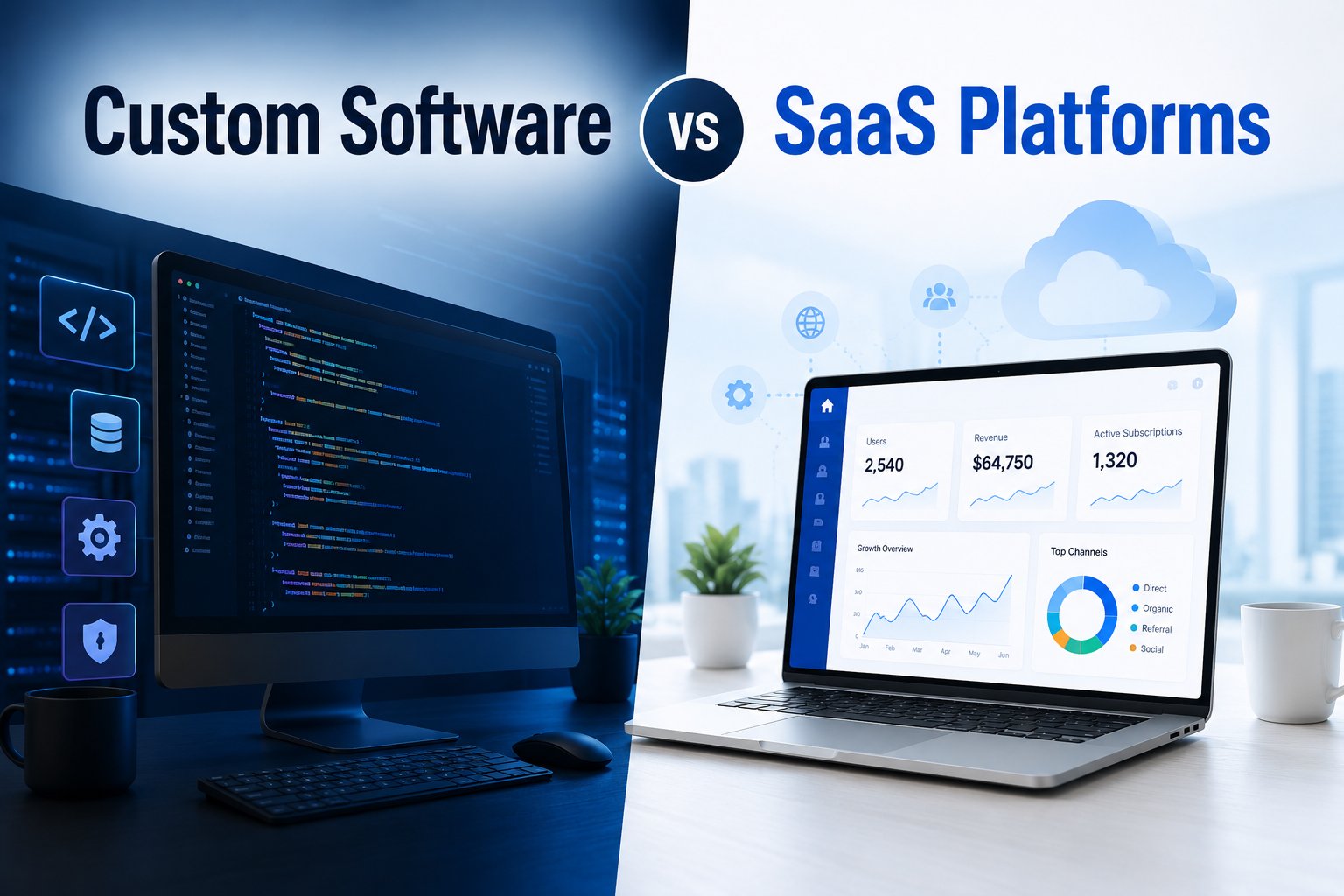
Custom Software vs SaaS Platforms is one of the biggest technology decisions businesses face in 2026. Companies today need systems that can scale fast, support automation, and adapt to changing operations.
Many businesses start with SaaS platforms because they are easy to use and quick to deploy. But as operations grow, limitations in customization, integrations, and scalability often become more noticeable.
That is why more companies are now investing in custom software development. It offers better flexibility, stronger performance, and long-term scalability built around specific business needs.
What Is Custom Software?
Custom software is a system built specifically for a business.
Unlike generic tools, custom software is designed around your workflows, operations, and goals. Every feature is tailored to how your company actually works.
Businesses commonly use custom software for:
- Internal systems
- CRM platforms
- Admin dashboards
- Workflow automation
- Reporting systems
- Operational management tools
One major advantage is flexibility.
As the business grows, the software can continue evolving without depending on third-party platform limitations. This makes custom software development ideal for companies planning long-term digital growth.
What Is a SaaS Platform?
A SaaS platform stands for Software as a Service.
It is cloud-based software that businesses access through subscriptions. Instead of building a system from scratch, companies use ready-made platforms hosted by external providers.
Common SaaS platforms include:
- Project management tools
- Accounting software
- Team collaboration apps
- CRM platforms
- Marketing tools
SaaS platforms are popular because they are relatively fast to launch, easier to maintain, and usually require lower upfront costs compared to custom software development.
However, SaaS solutions are built for mass usage. Because of that, customization and scalability can become limited for businesses with more complex operations.
Key Differences Between Custom Software and SaaS Platforms
Both custom software and SaaS platforms help businesses operate more efficiently. However, they differ in flexibility, scalability, customization, and long-term business value.
1. Development and Setup
Custom software takes longer to build because everything is developed specifically for the business.
SaaS platforms are ready to use immediately. This makes them attractive for startups or companies needing fast deployment. SaaS platforms are ideal for businesses that prioritize speed and simplicity, while custom software is better suited for companies focused on long-term flexibility and scalability.
Related Articles:
10 Security Best Practices in Modern Web Application Development
How to Evaluate a Software Development Vendor Before You Sign
2. Customization and Flexibility
This is where the difference between custom software and SaaS platforms becomes more noticeable.
Custom software allows businesses to build tailored workflows, advanced automation, custom dashboards, and integrations based entirely on operational needs.
Meanwhile, SaaS platforms usually only provide limited customization within their existing ecosystem, which can become restrictive for companies with more complex operations.
3. Scalability
Scalability matters more in 2026 than ever before.
Businesses now require systems that support:
- Automation
- AI integration
- Multi-location operations
- Growing customer demand
- Complex internal processes
Custom software scales more effectively because the infrastructure is designed around business growth.
SaaS platforms scale well for standard use cases. But large or complex businesses may eventually outgrow platform limitations.
4. Ownership and Data Control
With custom software, businesses fully own the system and data.
This gives companies greater control over:
- Security
- Infrastructure
- Integrations
- Compliance
- Future development
With SaaS platforms, businesses depend on third-party providers for system management and platform policies.
To make the differences easier to understand, here is a side-by-side comparison between custom software and SaaS platforms. This comparison covers scalability, flexibility, ownership, long-term costs, and overall business suitability in 2026.
| Aspect | Custom Software | SaaS Platforms |
|---|---|---|
| Setup Time | Longer development process | Quick deployment |
| Customization | Fully customizable | Limited customization |
| Scalability | Highly scalable | Suitable for standard growth |
| Ownership | Full ownership and control | Controlled by provider |
| Integrations | Flexible and expandable | Depends on platform support |
| Long-Term Cost | Better long-term value | Ongoing subscription fees |
| Maintenance | Managed internally or by development partner | Managed by provider |
| Best For | Complex and growing businesses | Simple or standardized operations |
| Main Pros | Flexible, scalable, tailored workflows, better automation | Fast setup, lower upfront cost, easy maintenance |
| Main Cons | Higher initial investment, longer development time | Limited flexibility, vendor dependency, scaling limitations |
Which Scales Better in 2026?
When comparing Custom Software vs SaaS Platforms, custom software is becoming the stronger long-term solution for scaling businesses in 2026.
SaaS platforms are still useful for:
- Small businesses
- Startups
- Simple operational needs
- Fast deployment goals
But scaling today is no longer just about adding more users.
Modern businesses need systems that can:
- Automate workflows
- Handle complex operations
- Integrate with multiple platforms
- Support AI-driven processes
- Adapt quickly to business changes
This is where custom software performs better.
Custom software development gives businesses complete flexibility to scale without being restricted by third-party systems. Companies can continuously improve performance, expand features, and optimize operations based on real business needs.
For businesses planning long-term digital transformation, custom software offers stronger scalability, better operational efficiency, and greater future readiness compared to traditional SaaS platforms.
Build Scalable Software for Long-Term Growth
The decision between Custom Software vs SaaS Platforms depends on your business goals, operational complexity, and future growth strategy.
SaaS platforms work well for businesses that need speed and simplicity.
But for companies focused on scalability, automation, and long-term flexibility, custom software development is often the better investment in 2026.
At NewGen Development, we build tailored custom software solutions designed to support business growth and operational efficiency.
Our core services include:
- Internal systems and admin tools
- CRM dashboards and reporting systems
- Workflow automation
- System architecture and scalability planning
We help businesses create scalable digital systems that fit their workflows — not the other way around.
If your company is planning to scale smarter in 2026, reach out to our team and explore how custom software can support your next stage of growth.
Related Insights
 NewGen
7 Hidden Costs of Maintaining Legacy Software
Legacy software maintenance costs can extend beyond routine updates and technical support. While older systems may still function, businesses often face additional expenses from security vulnerabilities, inefficient workflows, and integration limitations. Understanding these hidden costs can help businesses decide when software modernization becomes a worthwhile investment. Why Does Legacy Software Become More Expensive Over Time? […]
 NewGen
10 Digital Transformation Priorities for Businesses in 2026
Digital transformation priorities in 2026 include AI, automation, cybersecurity, cloud systems, and scalable digital operations.
 NewGen
AI-Friendly Content: A Practical Guide for Businesses in 2026
Learn how to create AI-friendly content that improves visibility, builds authority, and helps your business get found in AI search.